
Your Ultimate Guide to a Peaceful Pilgrimage in Ayodhya

Updated: Sep 28
Ayodhya is no longer the quiet, relatively unknown pilgrimage town it was even five years ago. Since the consecration of Shri Ram Janmabhoomi Mandir on January 22, 2024, it has become the most visited religious destination in India. Over 16 crore visitors were recorded in 2024 alone, surpassing even the Taj Mahal in footfall. Millions more are expected through 2026 and beyond.
If you are planning your first visit to Ayodhya, or even your second or third, this guide is for you. We have put together everything you genuinely need to know. This includes Ram Mandir darshan timings, the temples not to miss, how to navigate the crowds, what to wear, what to carry, and how to make your pilgrimage meaningful rather than exhausting.
We are Panktipawan, a premium pilgrim hotel situated near Vasudev Ghat in Ayodhya. We have written this guide not to sell you a room, but to help every devotee who comes to Ram Lalla's city experience it with the depth it deserves.
Ram Mandir Darshan — Timings, Passes & Practical Tips
The Shri Ram Janmabhoomi Mandir is the spiritual heart of your Ayodhya visit. Here is what you need to know before you arrive.
Aarti / Darshan Timings
| Aarti / Darshan | Timing | Who Can Attend | How to Get Pass |
|----------------------|----------------|-------------------------|-------------------------------------|
| Mangala Aarti | 4:00 AM | Pass holders only | Online booking — fills weeks in advance during festival season |
| Shringar Aarti | 6:00 AM | Pass holders only | Online booking recommended |
| Morning Darshan | 7:00 AM – 11:30 AM | Open to all devotees | No pass needed. Arrive early — queues form by 6:00 AM |
| Rajbhog Aarti | Approx. 12:00 PM | Pass holders only | Online booking |
| Afternoon Darshan | 2:00 PM – 7:00 PM | Open to all devotees | No pass needed. Slightly shorter queues than morning |
| Sandhya Aarti | 7:00 PM – 7:30 PM | Pass holders only | Online booking |
| Shayan Aarti | 10:00 PM | Pass holders only | Online — rare and special |
The One Practical Tip Most Guides Miss
The temple closes between 11:30 AM and 2:00 PM. This break is for the bhog (prasad offering to Ram Lalla) and for temple cleaning. Most first-time visitors arrive at 11:00 AM and are turned away just 30 minutes later, frustrated after a long journey. Arrive by 6:30 AM, complete darshan by 9:00 AM, and your morning is blessed and unhurried.
If you cannot manage an early start, the 2:00 PM session is your better option. The post-lunch crowd is usually lighter than the morning rush.
What to Know Before You Enter Ram Mandir
The security procedures at the temple are thorough and rightly so. These rules protect millions of devotees. Following them without frustration is itself a form of dharma.
Permitted Items
✅ Small cloth bag or jhola (no hard frame)
✅ Prasad in a simple cloth or paper wrap, not plastic boxes
✅ Medicines with prescription if needed
✅ Traditional Indian attire: dhoti, kurta, saree, salwar suit
✅ Modest western clothing, shoulders and knees covered
✅ Cash in wallet or small purse (lockers available outside)
✅ Water bottle, hydration is essential in queues
✅ Walking stick or cane for elderly permitted and welcome
Not Permitted Items
❌ Mobile phones, smartwatches, earphones
❌ Cameras and video recording devices
❌ Leather belts, leather wallets, leather bags
❌ Metal objects, belts with large buckles
❌ Bags with hard frames (hard-shell backpacks)
❌ Revealing or immodest clothing
❌ Footwear inside the complex — slip-on sandals recommended
❌ Prasad in plastic containers or commercial packaging
The Free Locker Facility — Use It
Pilgrim Facility Centres (PFC) are placed at all major entry points to the temple complex. They provide free lockers where you can deposit your phone, bag, and valuables before entering. There is no charge. Your belongings are safe. Use this facility; it eliminates the stress of carrying prohibited items and makes your darshan more focused and peaceful.
The Seven Temples You Must Visit
Ayodhya is far more than one temple. It is a city of 7,000 temples, as the saying goes. But for a 2–3 day visit, these seven are the essential spiritual circuit, each one connected to a different chapter of the Ramayana and Ayodhya's eternal story.
1. Shri Ram Janmabhoomi Mandir
The ultimate purpose of your visit. Built over the sacred birthplace of Maryada Purushottam Shri Ram, this magnificent Nagara-style temple in pink sandstone is 161 feet tall and spreads across 70 acres. The idol of Ram Lalla, as a divine child, moves every devotee to tears. Allow at minimum 2–3 hours for your visit, including the queue, security, darshan, and absorption.

2. Hanuman Garhi
The guardian of Ayodhya. Before visiting Ram Mandir, tradition holds that you seek Hanuman Ji's blessing first. He is the protector of this city. The temple sits atop a hill with 76 steps, offering a panoramic view of the city. The deity here is Bal Hanuman seated in his mother Anjana's lap. The evening aarti here is deeply moving. Allow 45–60 minutes.

3. Kanak Bhawan
The golden house, gifted by Kaikeyi to Sita and Ram after their marriage. This temple houses beautiful golden idols of Ram and Sita, dressed in elaborate jewellery and regalia. The atmosphere is warm and intimate, far less crowded than Ram Mandir. Many devotees say the darshan here is among the most personally touching in all of Ayodhya. Allow 30 minutes.

4. Dashrath Mahal
The palace of Maharaj Dashrath, Ram's father. This is one of the most emotionally resonant places in Ayodhya for those who come on a pilgrimage of Pitru Agya Palan, the dharma of honouring one's father. Standing in the palace where Maharaj Dashrath gave his promise that sent Ram to the forest, one understands what Ayodhya means beyond its beautiful temples. Allow 30 minutes.

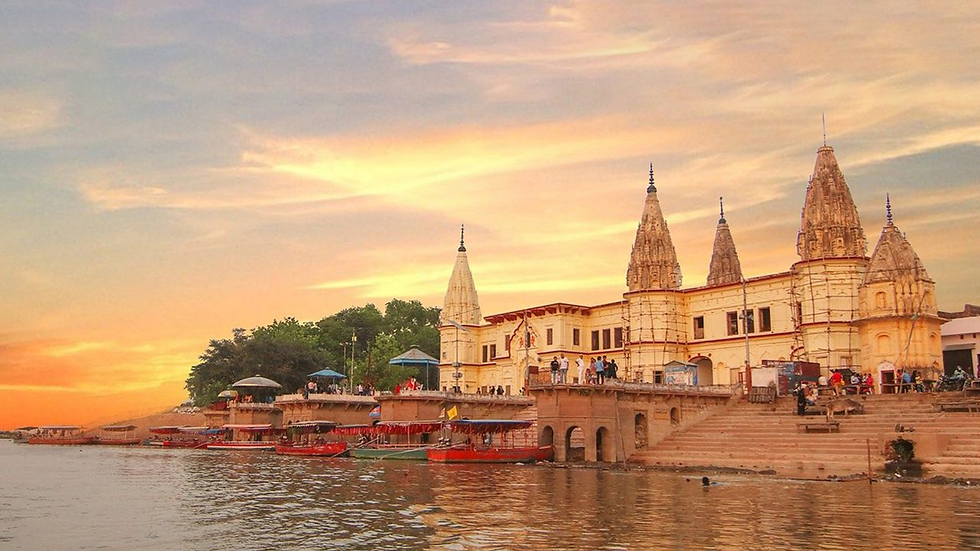
5. Saryu Ghat
The sacred river that flows through Ayodhya's soul. The Saryu is older than the temples. This is where Ram and his brothers bathed, where rishis performed tapas, and where Ayodhya has held its festivals for ten thousand years. The evening Saryu Aarti, similar to the Ganga Aarti in Varanasi, is a spectacle of light and devotion. Do not miss a morning snan (dip) in the Saryu if you are physically able. Allow 60–90 minutes at the ghat.
6. Treta Ke Thakur (Ram's Coronation Temple)
One of Ayodhya's oldest continuously worshipped temples, said to be built on the site of the Ashwamedha Yagna performed by Ram after his return from Lanka. The idols here are carved from a single black stone and are considered especially powerful. It is popular as Kale Ram Mandir. Far fewer tourists visit here, making it a contemplative, quiet spot in Ayodhya.

7. Nageshwarnath Mandir
The Shiv temple established by Kush, Ram's son, for the sake of a Nag Kanya (serpent princess) who had fallen in love with him. One of the 12 jyotirlinga-adjacent temples of UP. The Shivratri celebrations here are among the most ancient and atmospheric in the entire Avadh region. Pay your respects to Mahadev as you complete the circuit of Ayodhya.

The Best Time to Visit Ayodhya in 2026
The honest answer depends on what you want from your pilgrimage.
| Period | Experience | Crowd Level | Recommendation |
|----------------------|--------------------------------------------------------|--------------------|-------------------------------------------------|
| October – March | Best weather. Cool mornings, pleasant days. Most comfortable for darshan and walking. | Moderate to High | Best overall, especially November and February. |
| Ram Navami (April 2026) | The biggest festival of the Ayodhya calendar. Entire city transforms. Special rituals, processions, thousands of sadhus. | Enormous | For the spiritually adventurous. Book accommodation months ahead. |
| Deepotsav / Diwali (Oct 2026) | Millions of diyas lit on the Saryu banks. Ayodhya becomes a sea of light. Emotionally unforgettable. | Enormous | Once-in-a-lifetime experience. Plan 8–10 months ahead. |
| June – August (Monsoon) | Saryu in full flow. Fewer tourists. Green, peaceful Ayodhya. Sawan month, intensely spiritual. | Low | For serious pilgrims who want unhurried, personal darshan. |
| Kartik Purnima (Nov) | Saryu snan on full moon. One of the holiest baths in the Hindu calendar. Ancient tradition. | High | Deeply spiritual, plan 3 months ahead. |
How to Reach Ayodhya in 2026
By Air
Maharishi Valmiki International Airport (AYJ) now has direct flights from Delhi, Mumbai, Bangalore, Ahmedabad, and several other major cities. Taxi from the airport to the city centre: approximately ₹200–400, 30–45 minutes.
By Train (Most Popular)
Ayodhya Junction (AY) and Ayodhya Dham Junction (AYDH — the new station) are both well-connected. Vande Bharat Express from Delhi takes approximately 6 hours. Trains from Lucknow run every 1–2 hours and take about 2 hours.
By Road
Well-connected to Lucknow (135 km, ~2.5 hours), Varanasi (200 km, ~3.5 hours), Prayagraj (170 km, ~3 hours), and Gorakhpur (130 km, ~2.5 hours) by road. Regular state and private bus services. NH27 provides good road connectivity.
Practical Tips From People Who Live Here
Wear slip-on footwear. You remove sandals before every temple — slip-ons save you 10 minutes per temple and considerable frustration over a full day.
Carry a small cloth bag, not a hard backpack. Bags with frames are not permitted inside Ram Mandir, and smaller bags navigate the crowds more easily.
Hire a local guide for your first visit. A good guide turns a walk through temples into a living Ramayana recitation. Your hotel or homestay can arrange one — budget ₹500–1,000 for a half-day guide.
Start your day at Saryu Ghat at dawn. The early morning light on the river, the chanting, the other pilgrims — this is the Ayodhya that stays with you long after the crowds have arrived.
Eat sattvic food. Ayodhya is not the place for street-food experimentation. Pure sattvic meals, no onion, no garlic, pure ghee, are widely available and are what your body needs during a spiritual pilgrimage.
If you are coming with elderly family members, contact your accommodation in advance about accessibility, wheelchair arrangements, and dietary needs.
Book your aarti pass 15–30 days in advance online. For Ram Navami and Deepotsav, book 2–3 months ahead. The passes are free but fill quickly.
Respect the queue. Every person in that line has come from across India to stand in this same space. The patience with which pilgrims wait is itself a form of prayer.
Your Sattvic Home in Ayodhya
If you are planning your Ayodhya yatra and are looking for a comfortable, sattvic, premium base, a place where you are welcomed with folded hands, fed with pure Awadhi food, offered puja seva by a resident Sanskrit scholar, and cared for with the attention an elderly pilgrim deserves, we would be honoured to receive you at Panktipawan.
📍 Sursar Colony PNB lane Vasudev Ghat, Ayodhya
📞 [+91 91962 48636 – Hotel Panktipawan Reception]
जय श्री राम 🙏
Comments